
How to Create a High-Converting Landing Page
A landing page is one of the most important assets in digital marketing. It is the page where attention turns into action, where visitors either become leads, customers, or subscribers. A well-designed landing page can dramatically improve campaign performance, lower acquisition costs, and increase return on ad spend. A weak landing page, on the other hand, can waste traffic, reduce trust, and leave conversions on the table.
Creating a high-converting landing page is not just about making it look attractive. It is about understanding user intent, removing friction, delivering a focused message, and guiding visitors toward one clear action. The best landing pages combine persuasive copy, strong visual hierarchy, trust signals, and conversion-focused design.
In this guide, we will explore how to create a high-converting landing page from start to finish. Whether you are building a page for lead generation, product sales, webinar registrations, or service inquiries, these principles will help you turn more visitors into customers.
What Is a Landing Page?
A landing page is a standalone web page created for a specific marketing goal. Unlike a homepage, which serves many purposes and links to multiple sections, a landing page is focused on one primary objective. That objective may be to collect email addresses, book calls, sell a product, or encourage a sign-up.
People usually arrive on landing pages from ads, email campaigns, social media posts, search results, or referral links. Since these visitors already have some level of interest, the landing page must quickly reassure them that they are in the right place and make it easy to take the next step.
A high-converting landing page does three things very well:
- It matches the visitor’s intent.
- It clearly communicates value.
- It makes action simple and compelling.
Why Landing Pages Matter
Landing pages play a critical role in digital marketing because they allow you to control the user journey. Instead of sending traffic to a general website page with too many distractions, you send it to a focused destination designed to convert.
Here is why landing pages matter so much:
- Improve conversion rates by narrowing the visitor’s attention to one goal.
- Support paid advertising by ensuring the message in the ad matches the page experience.
- Help generate leads by offering something valuable in exchange for contact information.
- Provide better tracking and optimization opportunities because each page is tied to a specific campaign.
- Increase relevance by addressing a specific audience, problem, or offer.
If your traffic is getting clicks but not conversions, the problem often lies not in the traffic source but in the landing page experience.
Start With a Clear Goal
Before designing or writing anything, define the goal of the landing page. A page without a clear goal will confuse visitors and reduce conversions.
Ask yourself what action you want the user to take. Do you want them to:
- Fill out a form?
- Buy a product?
- Schedule a consultation?
- Download a guide?
- Register for an event?
- Subscribe to a newsletter?
Every element on the page should support that single goal. If something does not help the visitor convert, it probably does not belong on the page.
A landing page with one clear objective is far more effective than a page trying to accomplish too much at once.
Understand Your Audience
The most effective landing pages are built around the audience, not the business. To convert well, your landing page must reflect the needs, desires, pain points, and objections of the people visiting it.
Start by answering these questions:
Who is the target audience?
- What problem are they trying to solve?
- What results are they looking for?
- What might stop them from converting?
- What language do they use when describing their problem?
The more closely your landing page speaks to the visitor’s mindset, the more persuasive it becomes. A landing page for first-time buyers should feel different from one created for enterprise decision-makers. A page for fitness coaching should sound different from one for legal services or software.
Audience understanding shapes everything: the headline, the offer, the images, the testimonials, and even the call to action.
Craft a Strong Headline
The headline is one of the most important elements on the page. It is the first thing visitors read, and it often determines whether they keep scrolling or leave.
A good headline should immediately answer three questions:
- What is this?
- Who is it for?
- Why should I care?
High-converting headlines are clear, specific, and benefit-driven. They do not try to sound clever at the expense of clarity.
For example, instead of saying “Grow Smarter,” a stronger headline might be “Generate More Qualified Leads With a Landing Page Built to Convert.”
Instead of “Get Fit Fast,” a more effective headline might be “Lose Weight With a Personalized 8-Week Coaching Program.”
A headline should promise value without exaggeration. Visitors need to understand in seconds what they will get and why it matters.
Write a Compelling Subheadline
The subheadline supports the headline and adds more detail. It can clarify the offer, explain the outcome, or reduce uncertainty.
If the headline gets attention, the subheadline helps build interest. It should expand on the promise in the headline without becoming overly long or complicated.
For example:
Headline: “Build a Landing Page That Converts.”
Subheadline: “Use proven design and copywriting strategies to turn more visitors into leads and customers.”
The subheadline gives visitors more context and encourages them to keep reading. It is a small element, but it can have a major effect on clarity and conversion.
Focus on One Offer
A landing page should promote one offer and one offer only. Too many options create hesitation. Too much information creates confusion. The more focused your offer, the easier it is for visitors to say yes.
Your offer should be valuable, specific, and relevant to the audience. It may be:
- Free consultation
- Downloadable resource
- Discount or special deal
- Software trial
- Webinar registration
- Service package
- Product purchase
The offer must feel worth the visitor’s time, attention, or contact details. If the value is unclear, conversion rates will suffer.
A high-converting landing page is built around a simple exchange: the visitor gives something small, and in return, they receive something valuable.
Make the Value Proposition Clear
Your value proposition explains why the offer is worth choosing. It tells visitors what makes your product, service, or solution different and better.
A strong value proposition should answer:
- What do I get?
- How does it help me?
- Why is this better than other options?
This message should appear near the top of the page and be reinforced throughout the content. The visitor should never have to guess what is being offered.
For example, if you offer a business coaching consultation, the value proposition might be:
“Get a 30-minute strategy session that identifies growth opportunities, improves lead generation, and helps you build a clearer marketing plan.”
That is much stronger than a vague statement like “Book your free consultation today.”
The more concrete the value, the more persuasive the page becomes.
Use Persuasive Copywriting
Copywriting is the engine of conversion. Good design draws attention, but good copy drives action. The words on the page must connect with the visitor emotionally and logically.
Here are some important copywriting principles for landing pages:
- Speak directly to the reader using “you” language.
- Focus on benefits, not just features.
- Address pain points and desired outcomes.
- Keep paragraphs short and easy to scan.
- Use plain language instead of jargon.
- Make the copy specific and believable.
A visitor is more likely to convert when they can clearly see how the offer improves their situation.
For example, instead of saying “Our service includes advanced marketing tools,” say “Track leads, automate follow-ups, and improve conversions with one easy-to-use system.”
The second version is more outcome-focused and easier to understand.
Highlight Benefits, Not Just Features
Many landing pages fail because they list features without explaining why they matter. Features tell visitors what something is. Benefits tell them why it is useful.
For example:
Feature: 24/7 customer support
Benefit: Get help anytime, so you never lose a lead due to technical issues
Feature: Automated reporting
Benefit: Save time and make faster decisions without manual tracking
Feature: Mobile-friendly design
Benefit: Capture leads from any device without hurting user experience
Visitors care most about results. When you explain how your offer makes life easier, faster, cheaper, safer, or more profitable, you increase motivation to convert.
Build a Clear Visual Hierarchy
A high-converting landing page must guide the visitor’s eye. Visual hierarchy helps users understand what to look at first, second, and third.
Important elements should stand out through size, spacing, contrast, and placement. The visitor should naturally move through the page in a logical order.
A strong visual hierarchy often includes:
- A bold headline at the top
- A clear call to action button
- Supporting visuals or product images
- Short sections with headers
- Bullet points for readability
- Testimonials or trust signals
The goal is not to overwhelm the visitor with information. It is to make the page easy to scan and easy to understand.
Remember that most people do not read landing pages word for word. They skim. So your design must make the most important points visible quickly.
Use High-Quality Visuals
Images, graphics, and videos can significantly improve a landing page when used correctly. Visuals should support the message, not distract from it.
Choose visuals that:
- Show the product or service in action
- Reflect the target audience
- Build trust and professionalism
- Clarify the offer
- Create emotional connection
Avoid generic stock photos that feel fake or disconnected from the brand. Real images, screenshots, product demos, or team photos often perform better because they feel authentic.
If you use video, keep it short and focused. A concise explainer video can help visitors understand the offer faster and build confidence in the brand.
Visuals should reinforce the story your copy is telling.
Keep the Page Simple
Simplicity is one of the most powerful conversion principles. Every extra distraction makes it harder for the user to take action.
A landing page should be clean, uncluttered, and focused. Remove anything that does not directly support the goal.
That means limiting unnecessary:
- Navigation links
- Competing offers
- Long irrelevant text
- Excessive animations
- Overly complex forms
Multiple call-to-action buttons with different goals
Simplicity does not mean boring. It means intentional. Every element should have a purpose.
The easiest pages to convert are often the ones that feel the easiest to understand.
Create a Strong Call to Action
The call to action, or CTA, is the point where the visitor is invited to take the next step. It is one of the most important parts of the page.
A strong CTA should be:
- Clear
- Action-oriented
- Specific
- Easy to find
- Aligned with the visitor’s intent
Instead of vague language like “Submit,” use phrases such as:
- Get My Free Quote
- Book a Demo
- Download the Guide
- Start My Trial
- Reserve My Spot
- Claim Your Offer
The CTA should communicate what happens next and why it is worth clicking. It should also appear in multiple places throughout the page, especially after key sections, so visitors do not have to scroll back to find it.
The best CTA is not just a button. It is a clear invitation with low friction and obvious value.
Reduce Friction
Friction is anything that makes conversion harder. If a visitor feels uncertain, overloaded, or uncomfortable, they may leave before completing the action.
Common sources of friction include:
- Long forms
- Confusing instructions
- Slow page load times
- Too many required fields
- Lack of clarity about next steps
- Poor mobile experience
- Weak or missing trust signals
To reduce friction, make the process as easy as possible. Ask only for the information you truly need. Explain what happens after the form is submitted. Make the design fast and intuitive. Remove extra steps whenever possible.
The fewer barriers between interest and action, the better your conversion rate will be.
Use Social Proof
People are more likely to convert when they see that others have already had a positive experience. Social proof creates trust and reduces doubt.
Examples of social proof include:
- Customer testimonials
- Case studies
- Reviews and ratings
- Client logos
- Usage statistics
- Before-and-after results
Short quotes from satisfied customers can be especially effective when they mention specific outcomes. For example:
“This landing page doubled our lead generation in less than a month.”
That is far more powerful than a generic compliment like “Great service.”
Social proof should be relevant, believable, and placed strategically around the page, especially near the call to action.
Add Trust Signals
Even if visitors are interested, they may hesitate if they are unsure whether your business is credible. Trust signals help reassure them.
Useful trust signals include:
- Secure payment badges
- Privacy statements
- Guarantees
- Industry certifications
- Awards
- Media mentions
- Professional design
- Contact information
- Clear company details
The more important or expensive the offer, the more trust the page needs to build. A visitor is much more likely to submit a form or make a purchase when the page looks professional and legitimate.
Trust is not a bonus. It is a core part of conversion.
Optimize for Mobile
A large percentage of landing page traffic comes from mobile devices. If your landing page does not work well on smaller screens, you are likely losing conversions.
Mobile optimization means:
- Using responsive design
- Making buttons large and easy to tap
- Keeping text readable without zooming
- Shortening forms
- Avoiding overcrowded layouts
- Ensuring fast loading times
The mobile version of the page should be just as clear and persuasive as the desktop version. In many cases, it should be even simpler.
Test the page on multiple devices to make sure the experience feels smooth from start to finish.
Improve Page Speed
Speed matters. A slow landing page can hurt user experience and reduce conversions. Visitors are impatient, and even a short delay can lead to drop-offs.
To improve page speed:
- Compress images
- Minimize unnecessary scripts
- Use efficient hosting
- Reduce heavy animations
- Avoid oversized files
- Load only essential elements first
Page speed affects both user behavior and performance metrics. A fast page creates a better first impression and keeps visitors engaged long enough to convert.
Match the Message With the Traffic Source
A landing page performs best when it matches the message that brought the visitor there. This is especially important for paid ads, email campaigns, and social promotions.
If someone clicks on an ad promising “free website audit,” the landing page should immediately reinforce that exact offer. If the message shifts too much, visitors feel lost or suspicious.
This is called message match, and it is one of the simplest ways to improve conversion rates.
Make sure the headline, visuals, and call to action align with the traffic source. A consistent message builds confidence and reduces bounce rates.
Use Forms Wisely
If your landing page goal is lead generation, the form is one of the most important conversion elements. The form should be simple, clear, and easy to complete.
Best practices for forms include:
- Ask for only essential information
- Use clear field labels
- Keep the number of fields as low as possible
- Explain why you need the information
- Make errors easy to fix
- Place the form in a visible location
Long forms can discourage users, especially at the top of the funnel. Only ask for more information when the value of the offer justifies it.
For example, a free checklist may only require an email address, while a consultation request may need name, email, phone number, and business size.
The more effort you ask for, the stronger the perceived value must be.
Include a FAQ Section
A short FAQ section can help address objections and reduce uncertainty. It is particularly useful for offers that require more consideration, such as services, courses, software, or high-ticket products.
Good FAQ questions might include:
- How does this work?
- What happens after I sign up?
- Is there a refund policy?
- Who is this for?
- How long does it take to see results?
- Do I need any experience?
FAQs help remove doubts and give users the final confidence they need to convert. Keep answers concise, honest, and helpful.
Test Different Versions
No landing page is perfect on the first try. The most effective pages are usually the result of testing, analyzing, and improving over time.
A/B testing allows you to compare two versions of a page to see which one performs better. You can test:
- Headlines
- CTA button text
- Button color or placement
- Images
- Form length
- Copy variations
- Social proof placement
Even small changes can lead to meaningful improvements. The key is to test one element at a time so you know what actually caused the difference.
Use data to guide your decisions instead of relying on guesswork.
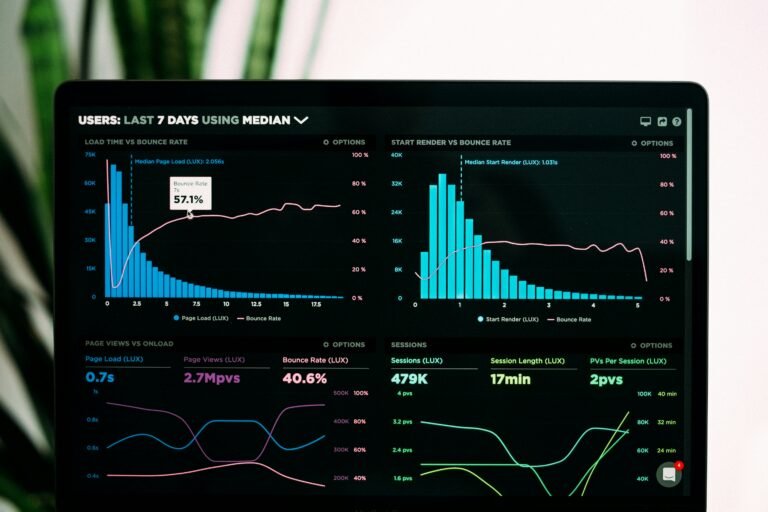
Track the Right Metrics
To improve a landing page, you need to know how it is performing. The right metrics depend on your goal, but some common ones include:
- Conversion rate
- Bounce rate
- Time on page
- Form completion rate
- Click-through rate
- Scroll depth
- Cost per conversion
Do not focus on traffic alone. A page can get many visitors and still perform poorly if they are not converting.
Look for patterns in the data. Are people leaving early? Are they clicking the CTA but not completing the form? And are mobile users converting less than desktop users? These insights help you make informed improvements.
Common Landing Page Mistakes to Avoid
Some landing pages fail not because the offer is weak, but because the page itself creates confusion or distrust. Avoid these common mistakes:
- Using too much text
- Having no clear CTA
- Making the offer too vague
- Including too many distractions
- Ignoring mobile users
- Using weak headlines
- Asking for too much information
- Failing to show proof or credibility
- Creating a mismatch between ad and page
- Forgetting to test and optimize
Eliminating these mistakes can improve performance significantly, even without a complete redesign.
A Simple Landing Page Formula
If you are building a landing page from scratch, use this simple structure:
- Headline that states the main benefit
- Subheadline that explains the offer
- Visual that supports the message
- Bullet points that highlight benefits
- Social proof to build trust
- Short form or CTA button
- FAQ or objection-handling section
- Final CTA at the bottom
This structure is flexible, but it gives you a strong foundation for most landing page types.
Final Thoughts
A high-converting landing page is not built by chance. It is created through clarity, strategy, and attention to the user experience. Every element on the page should work together to guide the visitor toward one action.
When you focus on audience needs, write clear copy, build trust, reduce friction, and test improvements over time, your landing page becomes much more effective. The result is more leads, more sales, and better marketing performance.
The best landing pages are not the most complicated. They are the most focused. They make the value obvious, the process simple, and the decision easy.
If you want your landing page to convert, start by making it useful, clear, and persuasive. Then refine it based on real results. That is how a good landing page becomes a high-converting one.