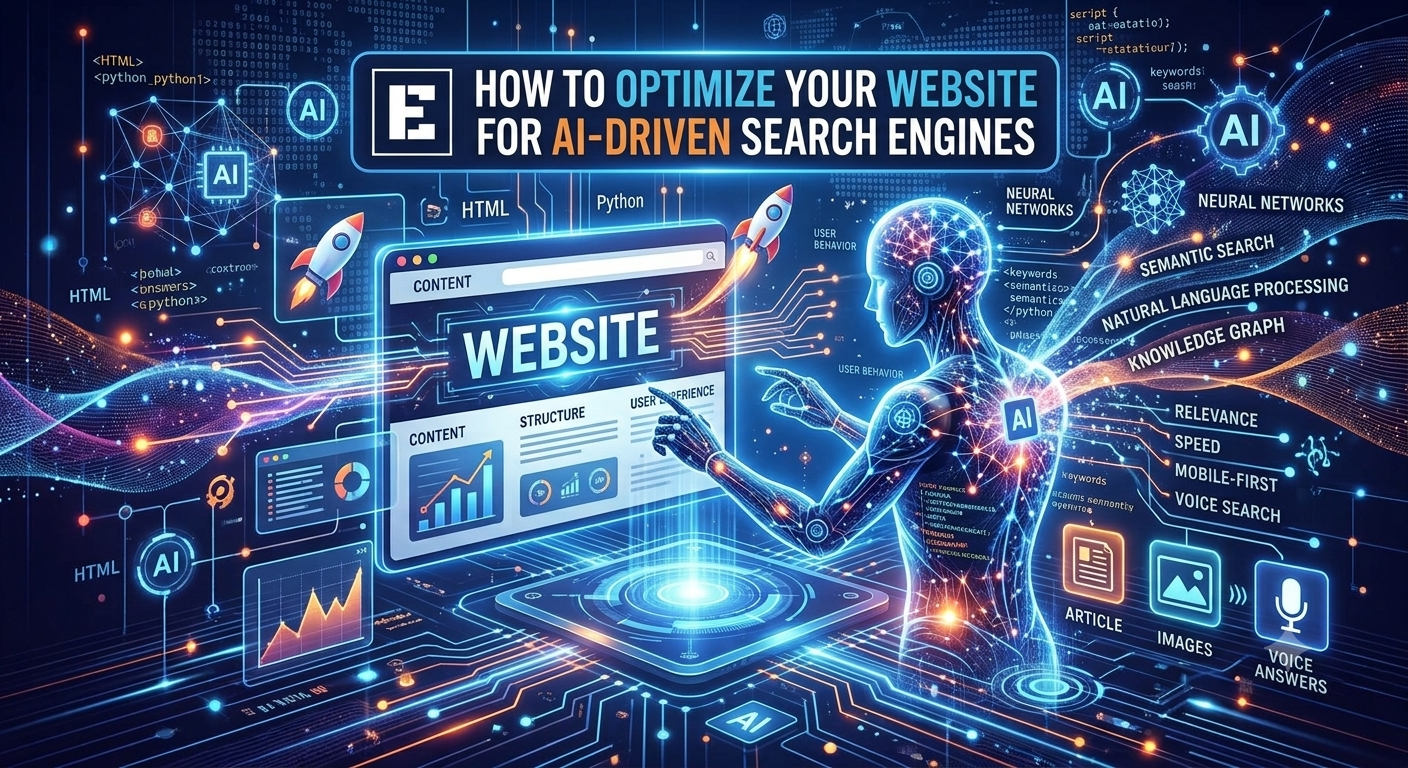
How to Optimize Your Website for AI-Driven Search Engines
The rules of digital visibility have fundamentally shifted. For decades, search engine optimization (SEO) revolved around a predictable formula: target exact-match keywords, build a robust backlink profile, and fight for a top-three blue link on a Google search engine results page (SERP). Today, that landscape is radically different. Users are no longer just browsing lists of links—they are asking conversational, complex questions to AI-driven search engines like ChatGPT Search, Perplexity AI, Google AI Overviews, and Claude.
Welcome to the era of Generative Engine Optimization (GEO) and Answer Engine Optimization (AEO). As an expert marketing studio helping brands navigate this digital evolution, we have put together this comprehensive, 3,000-word blueprint to help you adapt your website architecture, content strategy, and technical foundations for the AI-first search ecosystem.
Part 1: Understanding the Mind of the Machine (How AI Search Works)
To optimize your website for AI engines, you first need to understand how they consume and process information. Unlike traditional search engines that crawl pages primarily to index keywords and evaluate superficial link counts, Large Language Models (LLMs) and generative search systems evaluate content through three primary lenses: Semantics, Entities, and Citations.
1. Semantic Comprehension vs. Keyword Matching
Traditional SEO relied heavily on keyword density and exact-match variations (e.g., “best digital marketing agency in New York”). AI search engines utilize natural language processing (NLP) to understand intent and context.
- The Shift: An AI engine doesn’t care how many times you jammed a keyword into your metadata. It parses your paragraphs to see if you actually answer the user’s implicit and explicit questions logically, thoroughly, and concisely.
2. Entity-Based Indexing
AI models map the web as a vast graph of entities (people, places, concepts, organizations, and products) and the relationships between them.
- The Shift: Search engine algorithms want to know who you are, what authority you hold within your niche, and how your brand relates to core industry concepts. Brand mentions, co-citations across the web, and structured author data help AI systems map your brand identity with high confidence.
3. Retrieval-Augmented Generation (RAG) and Grounding
When a user submits a query to an AI answer engine, the system performs a live web retrieval (RAG), scans top-ranking sources, extracts key factual data points, and synthesizes a custom response grounded in those references.
- The Shift: Your content must be extractable. If your paragraphs are buried beneath fluff, introductory anecdotes, or gated behind heavy JavaScript, the AI crawler will bypass your site in favor of a cleaner, more direct competitor.
Part 2: The Core Pillars of Generative Engine Optimization (GEO)
Optimizing for AI search requires a dual approach: maintaining robust technical SEO hygiene while completely revolutionizing how you structure your on-site content. Let’s explore the core pillars that will secure your brand’s position as a primary AI citation source.
Pillar A: Content Formatting for Machine Extraction
AI models are efficiency engines. When synthesizing an answer, they look for self-contained blocks of text that directly address a specific sub-query.
- Write Self-Contained Answer Blocks: Avoid writing overly narrative paragraphs that require surrounding context to be understood. Structure your core points into clean, 40-to-60-word blocks. If an AI extracts a single paragraph out of context, it should still stand alone as a factual, complete answer.
- Frame Headings as Natural Questions: Format your H2 and H3 subheadings using the exact conversational questions your target audience is asking (e.g., “How do I calculate customer acquisition cost in SaaS?” instead of “CAC Calculation Overview”). This maps directly to how AI engines parse sub-topics.
- Utilize Bulleted and Numbered Lists: LLMs heavily favor structured data presentation. Complex frameworks,processes, and comparisons should always be broken down into clean markdown lists or comparison tables, which are easily ingested and reformatted into AI summaries.
Pillar B: Building Radical Topical Authority
You can no longer rank or get cited based on isolated, keyword-stuffed blog posts. AI engines look for comprehensive topical depth across an entire domain.
- Implement Content Hubs and Spoke Clusters: Build a definitive pillar page covering a broad topic (e.g., Digital Marketing Strategy), and support it with a cluster of tightly interconnected sub-topic articles (e.g., PPC budgeting, email marketing automation, GEO tactics). Use descriptive internal anchor text to show AI models the semantic relationships between these pages.
- Inject First-Party Data and Original Insights: AI models are trained to filter out generic, AI-generated commodity content. To win citations, infuse your content with proprietary research, original survey data, case studies, and expert commentary that cannot be found anywhere else on the web.
Pillar C: E-E-A-T and Entity Authority
AI search engines prioritize trust above all else. Because hallucinations are a constant risk for LLMs, they heavily favor sources backed by clear human expertise and verifiable brand credentials.
- Transparent Author Bios & Credentials: Every piece of content should feature a detailed author bio linked to schema markup, highlighting real-world credentials, industry experience, and professional background.
- External Citations & Fact-Checking: Back up your assertions with links to primary sources, government databases, peer-reviewed studies, and credible industry publications. Making your content verifiable makes it safe for an AI to cite.
Part 3: Technical Foundations for AI Crawlers
Even the most brilliant content will fail if AI crawlers cannot access, crawl, or render your pages cleanly. Modern technical optimization goes beyond basic mobile responsiveness—it requires explicit consideration of how machine agents interact with your infrastructure.
1. Audit Your robots.txt and Crawler Permissions
In the race to protect content rights, some webmasters accidentally block critical AI user-agents (such as OpenAI’s GPTBot, Perplexity’s scraper, or Anthropic’s ClaudeBot) within their robots.txt file.
- The Strategy: Review your site directives. Blocking AI crawlers prevents your brand from ever being learned from, referenced, or cited in conversational search results. Open your site to legitimate search and discovery bots while carefully managing proprietary internal data behind authentication walls.
2. JavaScript Rendering and Server-Side Rendering (SSR)
Many modern websites rely heavily on client-side JavaScript frameworks (like React, Vue, or Angular) to render content dynamically. While Google’s advanced renderer handles JS efficiently, some third-party AI crawlers struggle with heavy asynchronous rendering, resulting in blank pages during scraping.
- The Strategy: Implement Server-Side Rendering (SSR) or Static Site Generation (SSG) for your high-value informational pages, landing pages, and blogs. Ensure that your core content exists immediately within the raw HTML source code.
3. Structured Data and Schema Markup
Structured data is the universal translation layer between your website and machine algorithms. While not strictly mandatory for every AI search feature, robust schema markup helps search engines instantly categorize your entities.
- Key Schemas to Implement:
Article/NewsArticlewith verified author markup.FAQPageschema on all pages answering common user questions.OrganizationandLocalBusinessschema to anchor your brand identity.ProductandReviewschema for e-commerce visibility.
Part 4: The Off-Site Ecosystem (AI Reads the Whole Web)
A common misconception is that GEO happens entirely within the confines of your domain. In reality, AI engines evaluate your brand’s holistic footprint across the entire digital ecosystem.
When ChatGPT or Perplexity formulates an answer about the best software or service provider in a given industry, they cross-reference multiple third-party mentions to validate your authority.
- Digital PR and Third-Party Mentions: Traditional link building is evolving into mention building. Earning unlinked or linked brand citations in authoritative industry publications, digital PR roundups, and media outlets signals to AI models that your brand is a recognized market leader.
- Review Management and Ecosystem Consistency: AI engines heavily pull sentiment data from review platforms (G2, Capterra, Trustpilot, Google Business Profile, and Yelp). Ensure that your NAP (Name, Address, Phone Number) and service descriptions are impeccably consistent across the web. Positive sentiment and active review management directly influence whether an AI recommends your business over a competitor.
Part 5: Step-by-Step Action Plan for Your Marketing Strategy
To help you transition from theory to execution, here is a practical roadmap designed for marketing teams ready to conquer AI-driven search.
AI Search Optimization (GEO) Action Plan
Conclusion: Lead the Future of Search
The shift toward AI-driven search engines is the most monumental change in digital marketing history. Brands that cling strictly to legacy keyword-stuffing tactics will continue to watch their organic traffic dwindle into zero-click obscurity.Conversely, brands that embrace Generative Engine Optimization—by structuring their content for clarity, establishing unassailable topical authority, and optimizing their technical foundations—will secure prime positioning as the definitive sources cited by AI.
At expert marketing studio, we specialize in bridging the gap between traditional SEO excellence and advanced AI visibility strategies.